

Poleng: A Cloth Between Worlds
by Prinka Saraswati
The black-and-white checkered poleng cloth is among Bali’s most iconic sacred textiles. Within the austere simplicity of the pattern and colours, there is a deep philosophy that shapes how the Balinese understand the world.
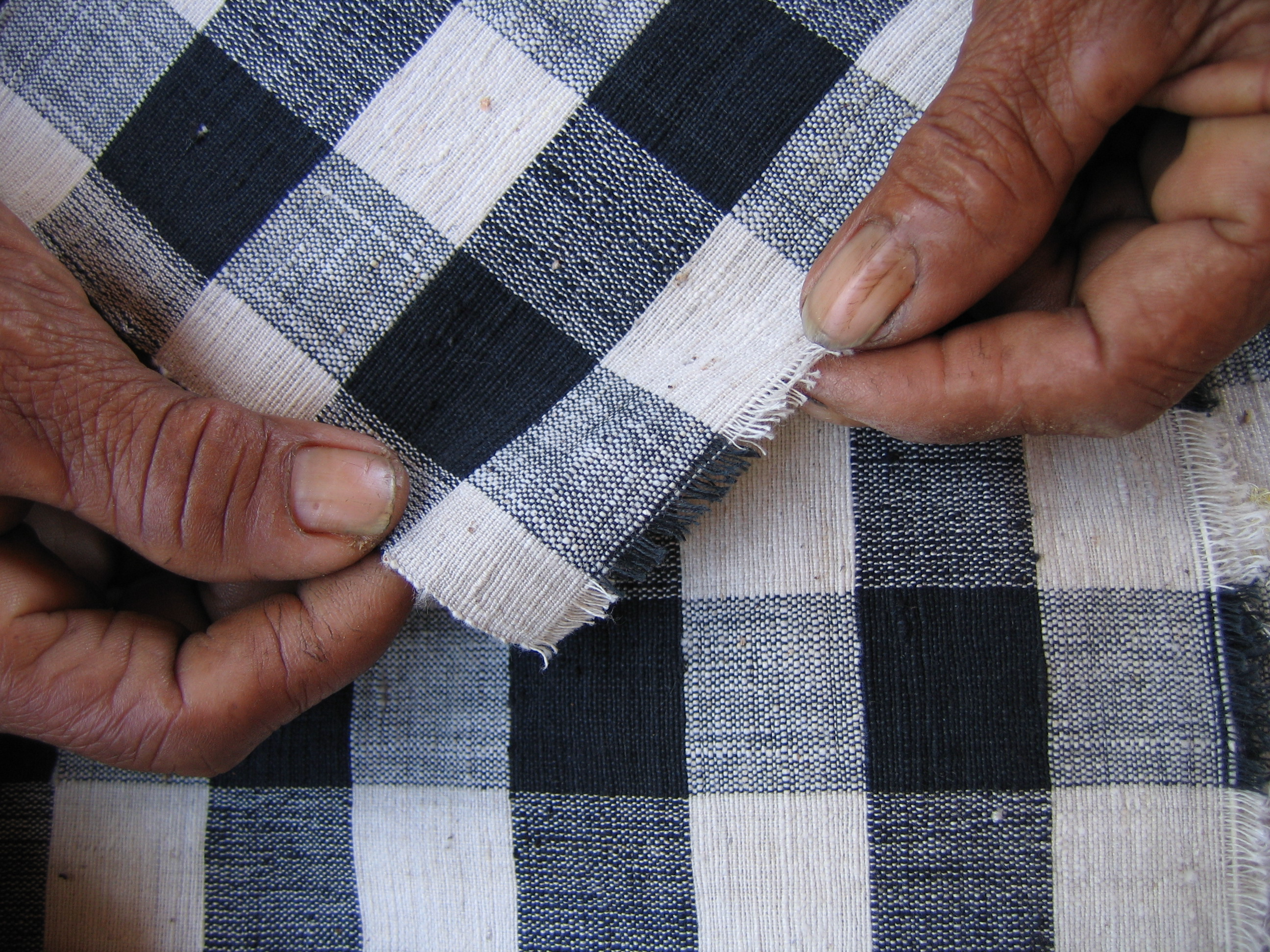
Closer look of poleng cloth.
This understanding is expressed through Rwa Bhineda — the principle of how existence unfolds through paired forces. Chaos and order. Creation and dissolution. Joy and sorrow. Heaven and earth. Good and evil. These opposites are not rivals to be conquered, but partners in relationship. Through Rwa Bhineda, harmony arises through balance.
Central to this view is the rendezvous of sekala and niskala — the seen and the unseen. Sekala is the tangible world: offerings, dances, nature and people around us. Niskala is the invisible dimension: ancestral presence. These realms are not separate territories. They overlap one another, like threads crossing on a loom.
Poleng makes this crossing visible.
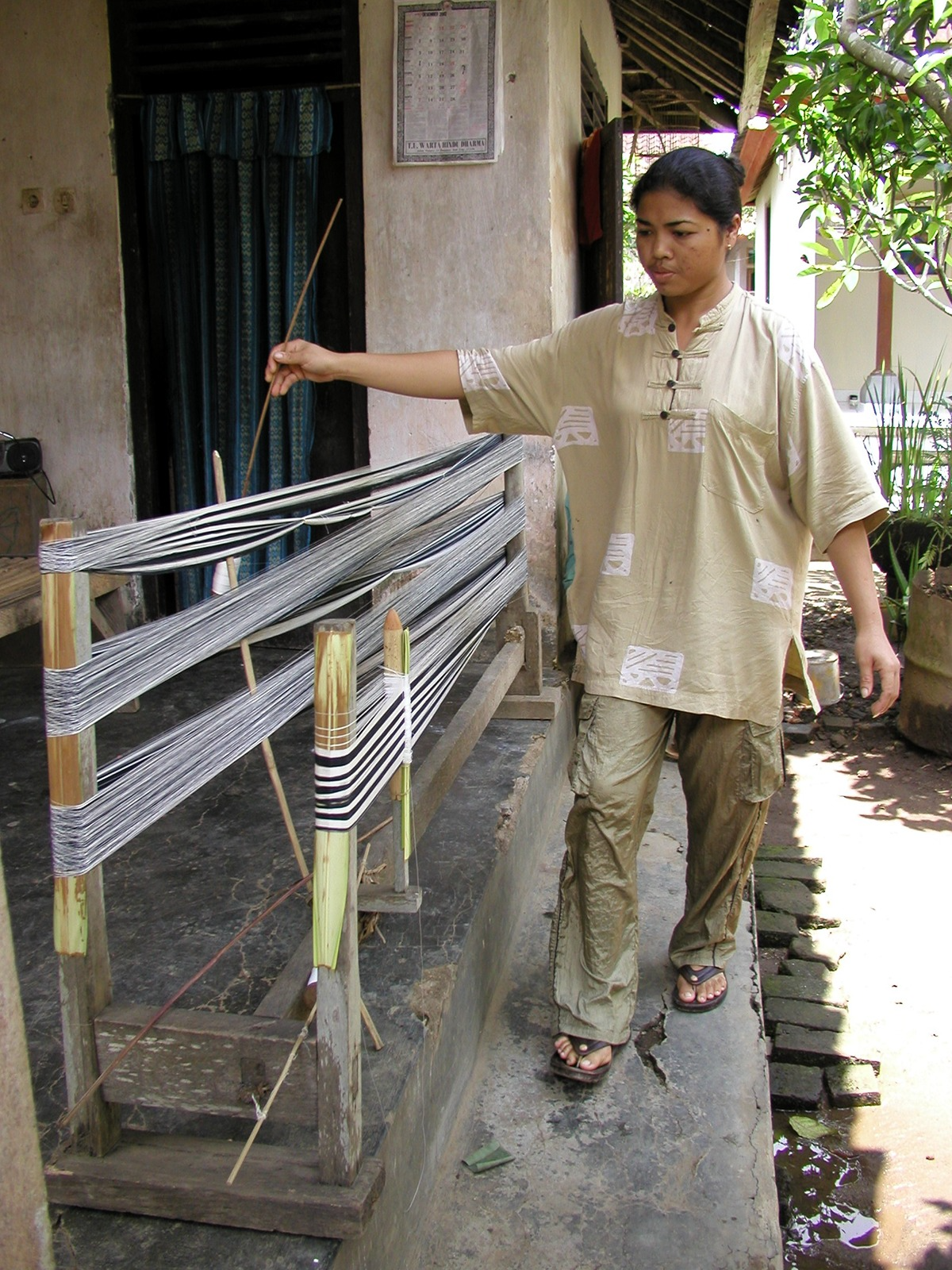
A weaver warping the black and white threads before weaving.
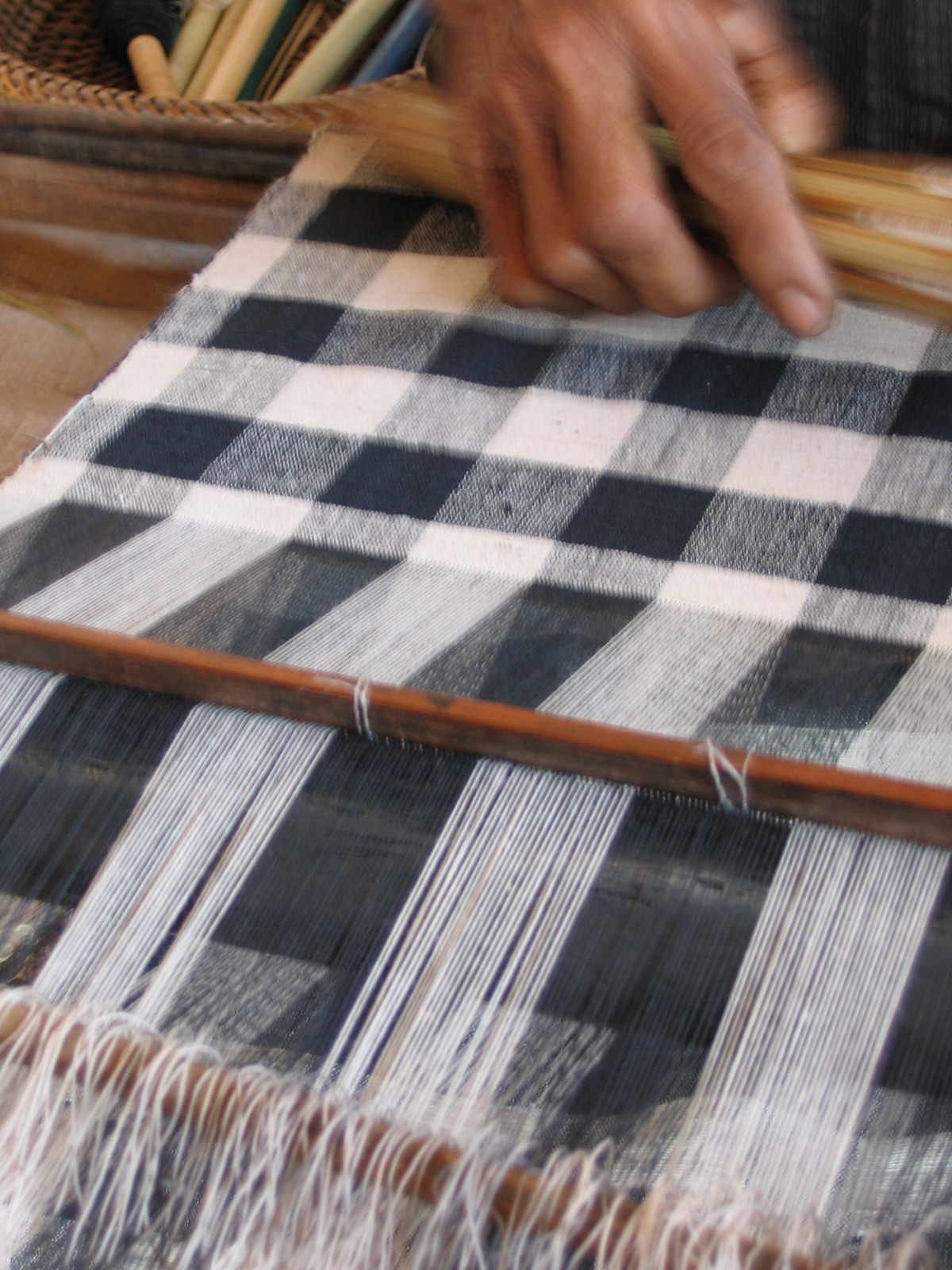
Poleng weaving.
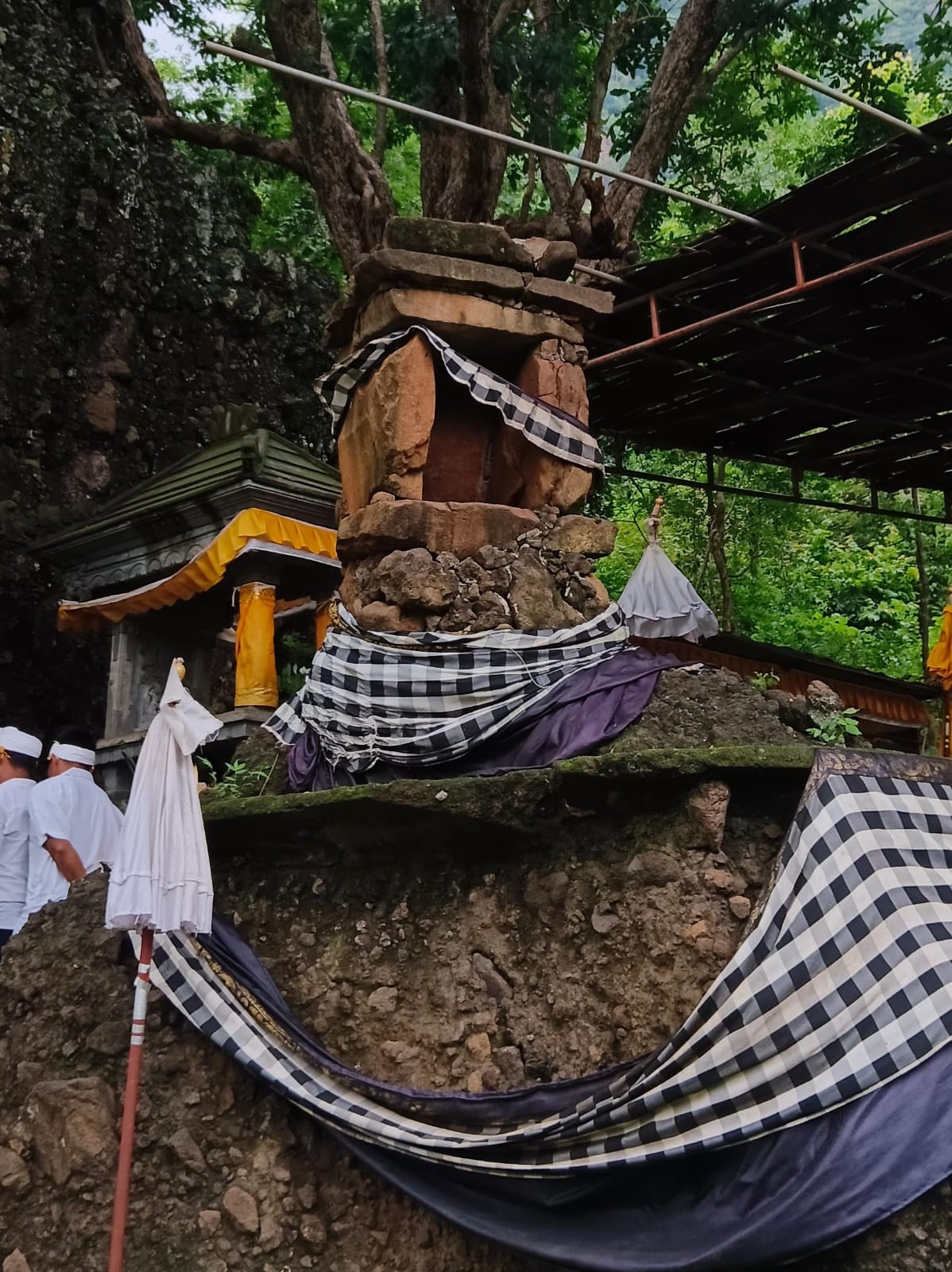
Poleng wrapped around a shrine.
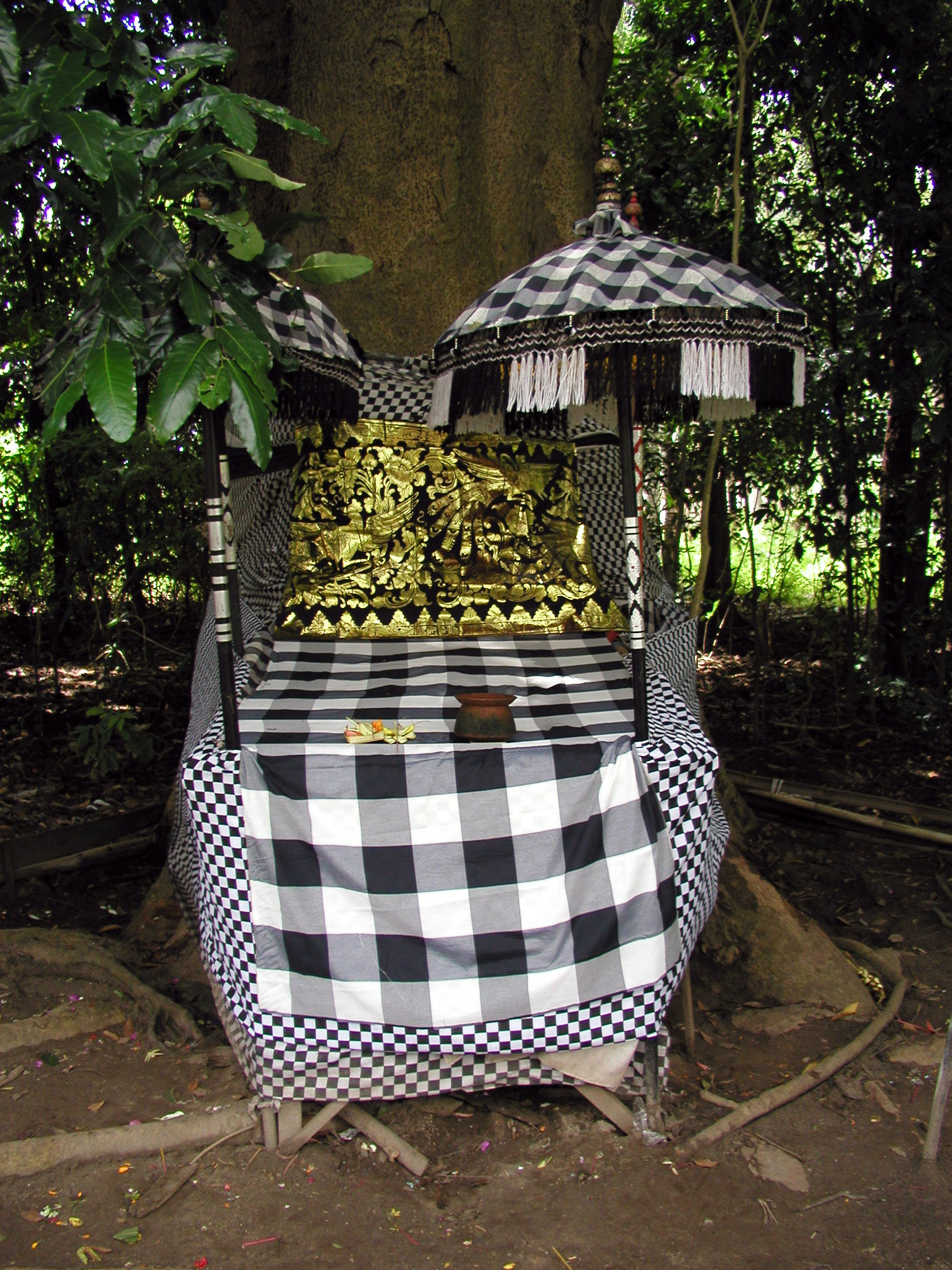
Poleng and prada cloth.
Wrapped around large trees, statues, shrines, or other sacred objects, the cloth marks a threshold. Poleng signals that what stands before us is more than material. A tree girded in black and white is recognized as inhabited. A statue bound in checkered cloth becomes a conduit between devotion and the divine. Poleng steadies space, acknowledging that every physical structure exists within a spiritual field. The cloth becomes a diagram of equilibrium, where tension is not conflict but a way to seek balance through it.
To stand before a shrine wrapped in poleng is to witness cloth becoming a way of seeing, believing. The pattern is both boundary and bridge, both declaration and invitation. It asks us to see beyond surfaces, to recognize that every visible form shelters an invisible dimension.
And in that holding, life finds its equilibrium.
Wrapped around large trees, statues, shrines, or other sacred objects, the cloth marks a threshold. Poleng signals that what stands before us is more than material. A tree girded in black and white is recognized as inhabited. A statue bound in checkered cloth becomes a conduit between devotion and the divine. Poleng steadies space, acknowledging that every physical structure exists within a spiritual field. The cloth becomes a diagram of equilibrium, where tension is not conflict but a way to seek balance through it.
To stand before a shrine wrapped in poleng is to witness cloth becoming a way of seeing, believing. The pattern is both boundary and bridge, both declaration and invitation. It asks us to see beyond surfaces, to recognize that every visible form shelters an invisible dimension.
And in that holding, life finds its equilibrium.


