

Notes from the Weaving Road: Timor – Lembata – Solor – Flores
Words and photos by Alden Arnold.
Morning twilight is when we departed from sleeping Ubud to I Gusti Ngurah Rai Airport, the first of our soon-to-be many early mornings. At noon we touched down in Kupang; waiting for our delayed luggage, containing our journey’s kilograms upon kilograms of indigo paste and field supplies, Pak Yansen and I could only grin at one another as we blinked away the day of travel.
Before 10am the following day, Pak Yansen and I were on motorbike from Lewoleba Airport, bags and boxes stacked and stuffed wherever two wheels could support. Our three-hour journey followed Lembata’s south-west coastline, hugging the feet of Ile Mingar and Ile Labelekang. Asphalt roads became gravel roads became questionable roads during our final ascent into our first weaving community.
Smiles were all I could make out as I stepped out into the village main street; children, aged five to fourteen, eagerly steered me to their school grounds and football pitch, practising their best English as they tested my knowledge of the ongoing World Cup. Mikael Doni, one of the village’s experienced weavers and our Lembata guide, met us outside the construction site of an expanded local church.
Through sunset, Pak Yansen prepped for a Bebali Foundation indigo workshop before Doni showed us down the cliffs to a Savu Sea tidal pool. Darkness fell as he washed the threads in salt water for the following morning’s workshop.
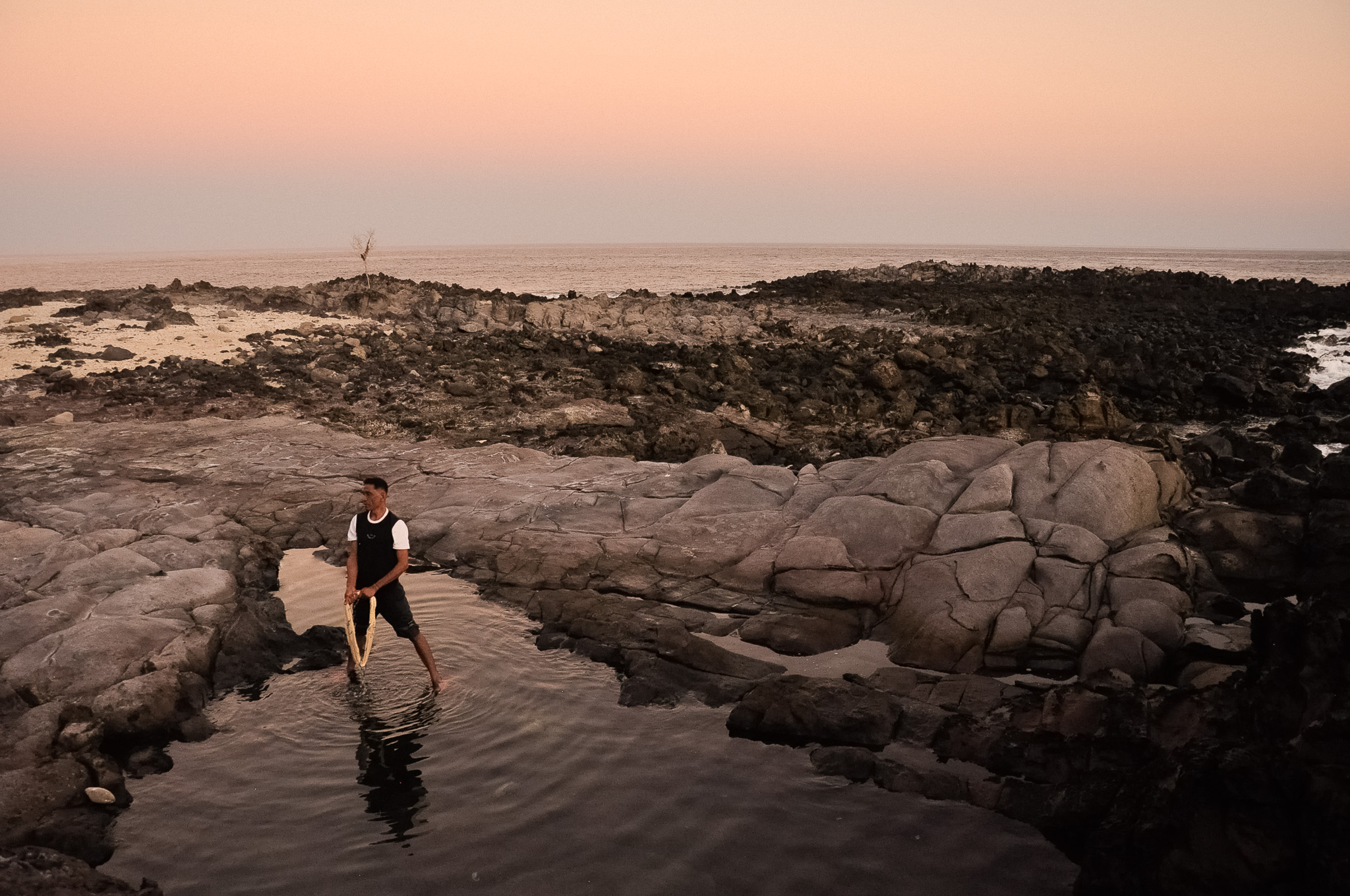
Mikael Doni washes threads in a tidal pool
The majority of our stay across the field trip was spent easily in conversation. Beyond the dyes and textiles, 28 years of annual visits have bloomed our business relationships into friendships. Over glasses of tuak, a local palm wine, and popcorn, we caught up with one another on the events — both personal and professional — since our last visit. Hands kept busy while we chatted, however: cotton was spun, scarves were finished, and baskets were weaved. Producing these woven goods is not simply work, but a social activity, one that the entire village participates in communally. Children and non-weavers participate in this circle as well, playing tag and preparing vegetables for the evening meal. The weavers shared with us one of their ancestral songs, which is typically sung in scenes like these:
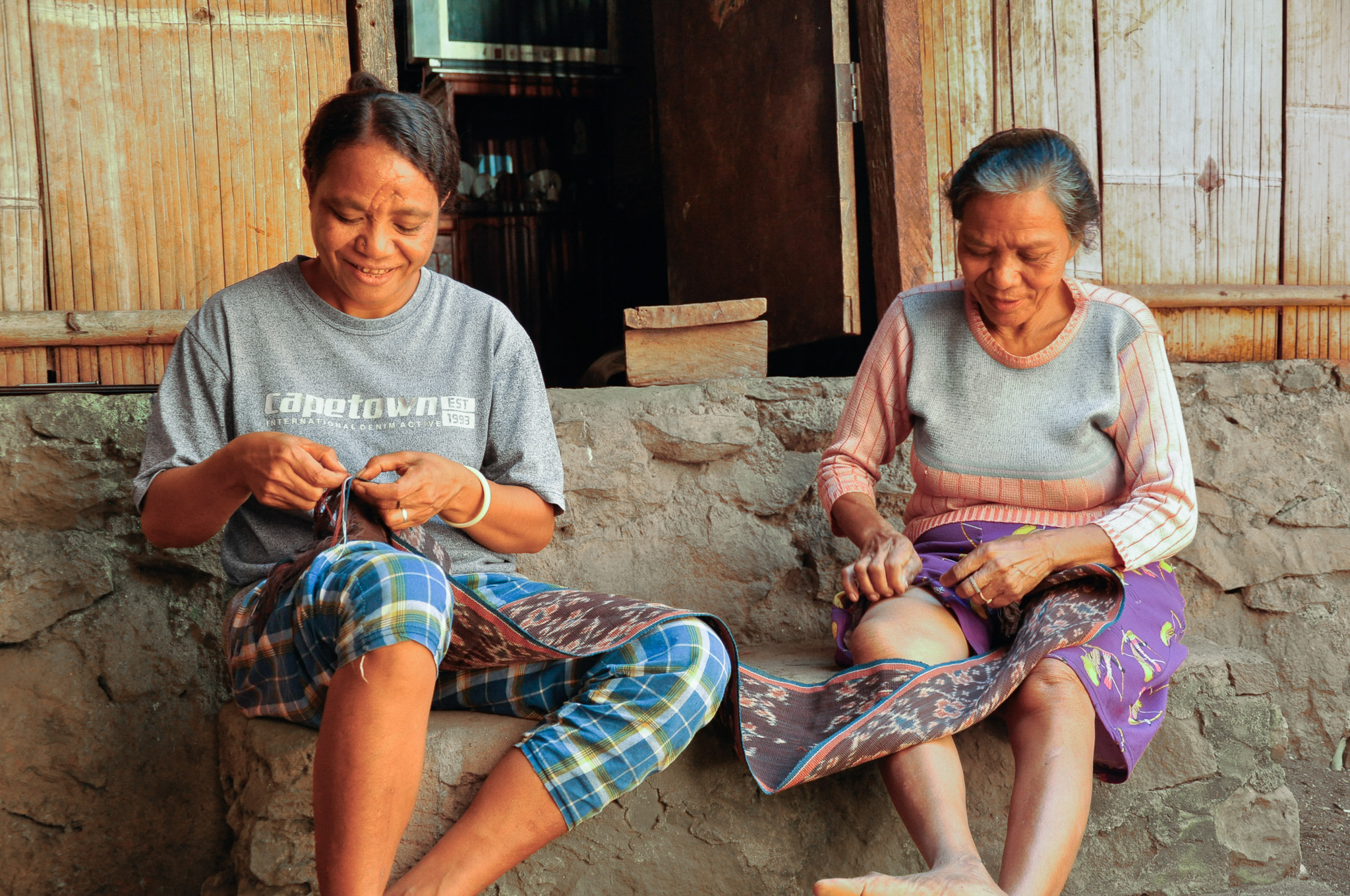
Two women finish a scarf while singing one of their ancestral songs.
We finished the evening with textile purchases. Pak Yansen gave careful inspection to each piece, working with the weavers to record and catalogue each and every aspect of its construction and design: weavers’ names, dyes, materials, techniques, structure, and motifs were all written down and attached before packing. Inconsistencies with previous textiles were noted, and unfamiliar motifs were discussed and likewise documented in both their indigenous and Indonesian names.
Our final morning on Lembata brought us to Lamalera, where the regional market meets biweekly. It is located at the midpoint between the mountains and the sea, where villages come to trade their respective goods. Produce might be bartered for fish, or clothing for whale meat, the area’s primary source of seafood. It was here that we visited Mama Kristina Krova, Threads of Life’s very first weaver partner. Before we left, she wrapped a scarf around my neck, a gift featuring an apt whale motif.
On day five we departed Lembata by ferry for Solor, with a transfer in Larantuka. These boats are still wooden, painted vibrantly, and open air. I spent the last hour of our sea voyage sticking my head out the hull’s side, washing my hair in the sea breeze and watching the archipelago go by. Pak Yansen and I then rode a bemo, ojek, two hours from the dock into the mountains of Solor. The route was hot, bumpy, and slow, so we distributed kerupuk between ourselves and the other passengers to lighten our journey.
Solor certainly earns its sweltering name; the geography is hostile and arid, and few trees or crops sprout from the lowlands’ rocky surface. It was no longer seaspray that fogged my sunglasses on our ascent, but dust.
The destination community, however, was anything but. Shaded by the mountain cliff beneath which the village sits, the streets were lined with flowers that rimmed green gardens and lawns. Our homestay for this leg was in a traditional home, a stilted bamboo house wrapped in palm leaf strands, woven into mesmerising motifs. Life is more comfortable in such houses, as the open fibres both keep mosquitos out and allow for cooling airflow.
The village was abuzz in the evening for a feast night; clanging metal drums and local chants filled the air as neighbouring villages processed into the central square, each bearing food for the occasion. Pak Yansen and I watched the opening ceremony, a blend of Catholic iconography and indigenous practices. Village elders took beetlenut from a palembang box before addressing the attendees with speeches — we are both Catholic in upbringing, but the event remained a delightful mystery to us both, a testament to the resilience of traditional ancestral practices within the religious paradigm.
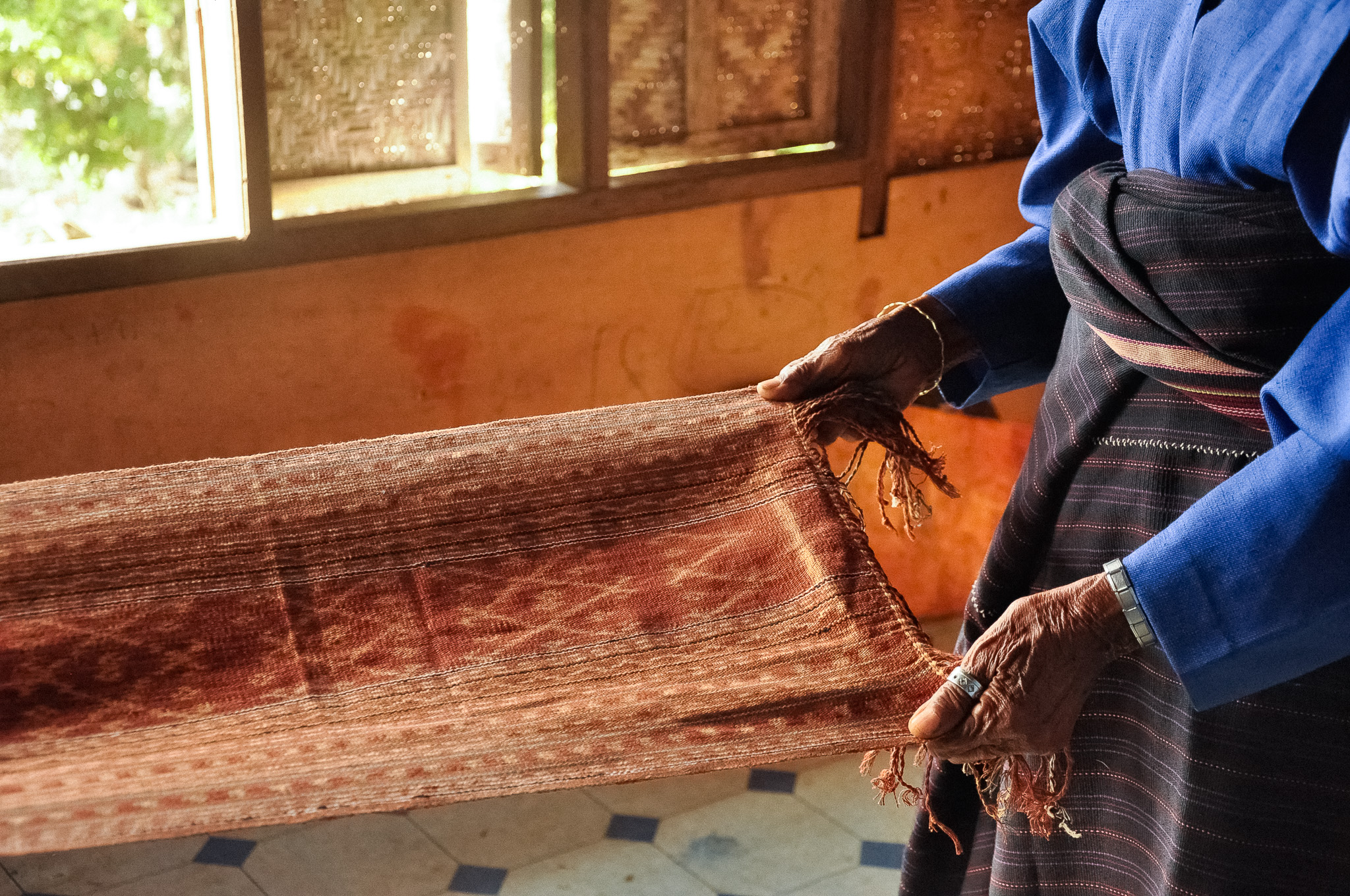
Textile being examined in a traditional woven house, Solor.
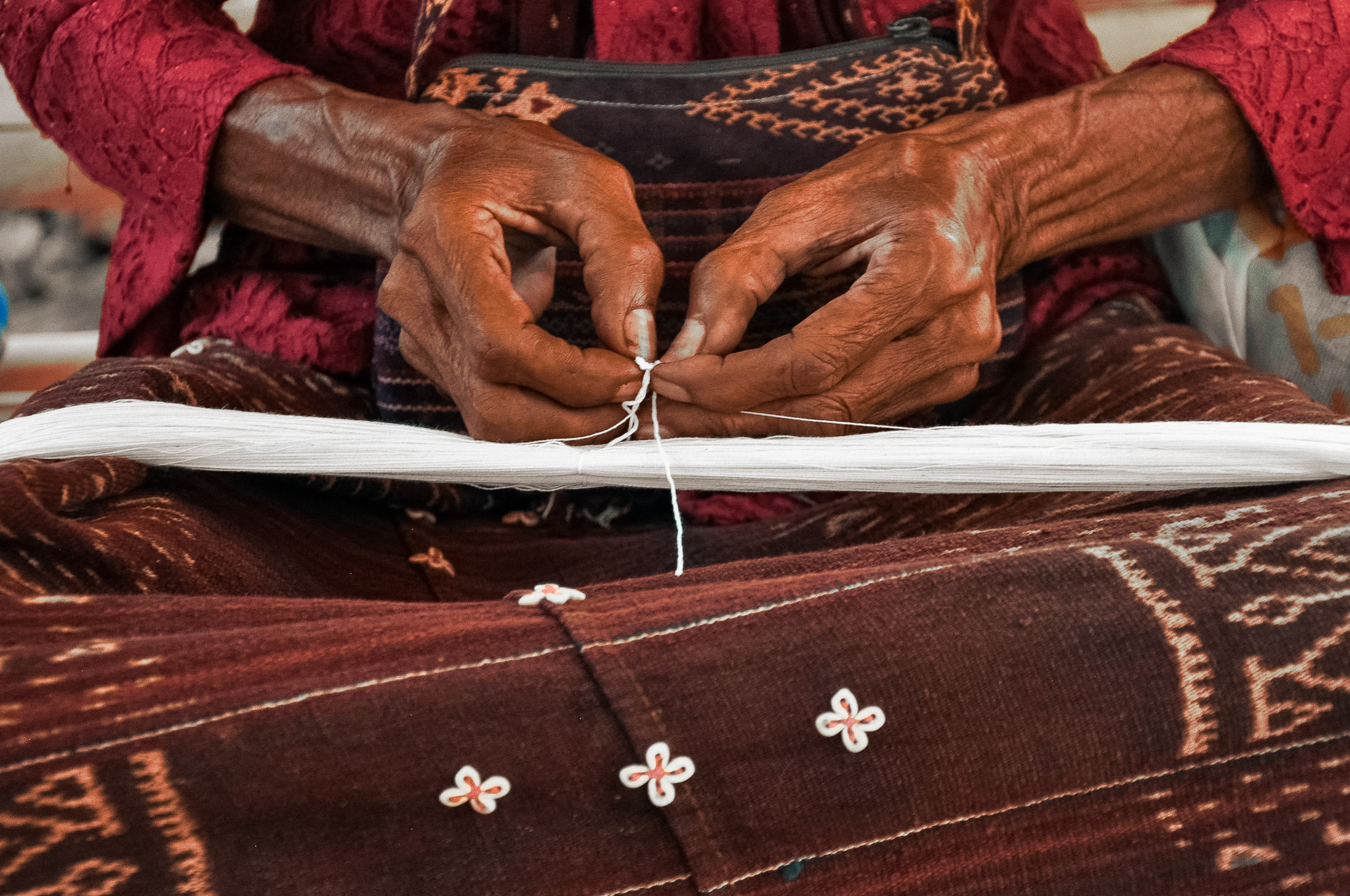
Kinge, on a woman's sarong in south Flores.
The following morning, Pak Yansen continued with a Bebali dye-making workshop, customising the practice to the village’s means and needs; careful consideration was made to the resources and instruments available so that the dyers may intuitively replicate the dye-making process after we have left. PA customary chief in his mid 50s, who also worked as a farmer, provided us with a glass of arak, a local palm liquor, on our departure to soften our rugged journey back down to the dock.
The red sun fell as we rode via motorbike down the East Flores coast, where we were warmly welcomed with heartfelt embraces and dinner. Among all the seafood I feasted on throughout the field trip, the Flores squid we enjoyed morning, noon, and night remains my favourite; I never said enak with as much heart as when I could spoon that homemade dish.
The indigo workshop the following morning was particularly special, as it included three generations of weavers. The younger women recorded the process on their phones for later reference, and the elders participated with an enthusiasm beyond their years. Smiles erupted during the dye process — the magic indeed never leaves.
The afternoon consisted of more textile purchases; kinge, small cowrie-shells collected from the nearby shore, sewn into star patterns on scarves and sarongs, are the signature motif of these East Flores villages. In combination with deep red-brown threads, these shells are a striking representation of these communities’ life-sustaining relationship with the sea. A weaver's husband led me and Pak Yansen to the beaches where these sea-artefacts are gathered; women from the village were busy harvesting scallops and clams for dinner from the tidal pools while we wandered among the mangroves.
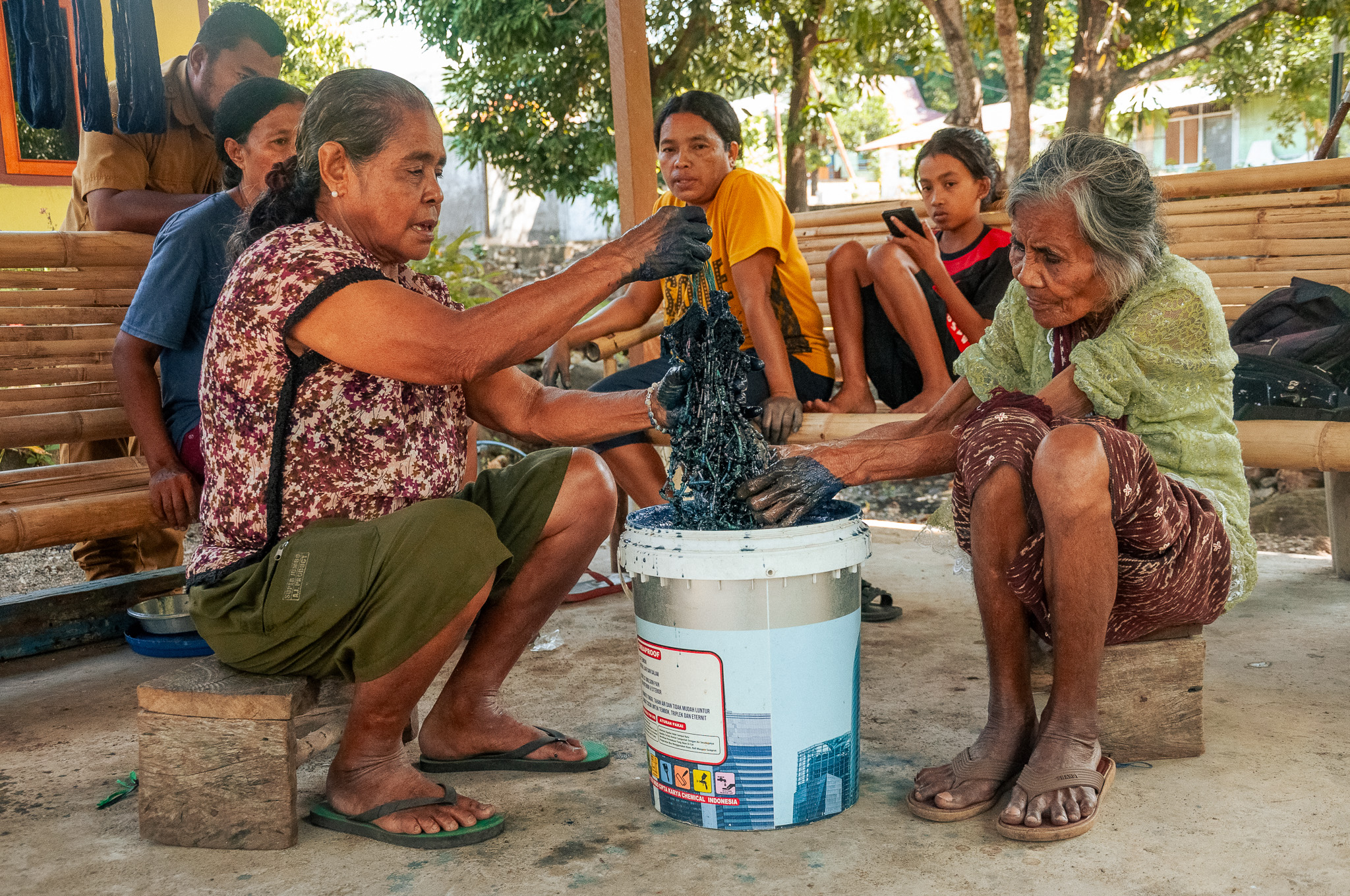
Three generations present for a Bebali Foundation's indigo dyeing workshop.
From there we drove to Maumere. Our brief stint on the north coast brought us to two weaving communities. First was Mama Kristina, whose workshop nested in the mountainside. During our visit, Mama showed us around her garden; there she grows indigo and cloves. Back down the mountain, we stopped at a beachside women-weavers cooperative. Shaded from the afternoon sun under a bale and swaying trees, the hanging textiles took on a dream-like quality as the light played upon their pastel motifs.
The next morning was slotted to be a much-needed rest day, as Yansen was to trade the helm with Pak Pung and Moyo for the remainder of the trip across Flores. Instead, our alarm clocks were replaced with alerts of an eruption from nearby Ile Lewotobi Laki-laki. While we were in no immediate danger, all flights out of Maumere, we read, were grounded as the ash cloud blew west. After a few rushed bites, Yansen and I sped the sickeningly windy 150km to Ende in just three hours, a journey that stresses even the most iron-stomached at five hours. Within a day, we were both safely off to Bali.
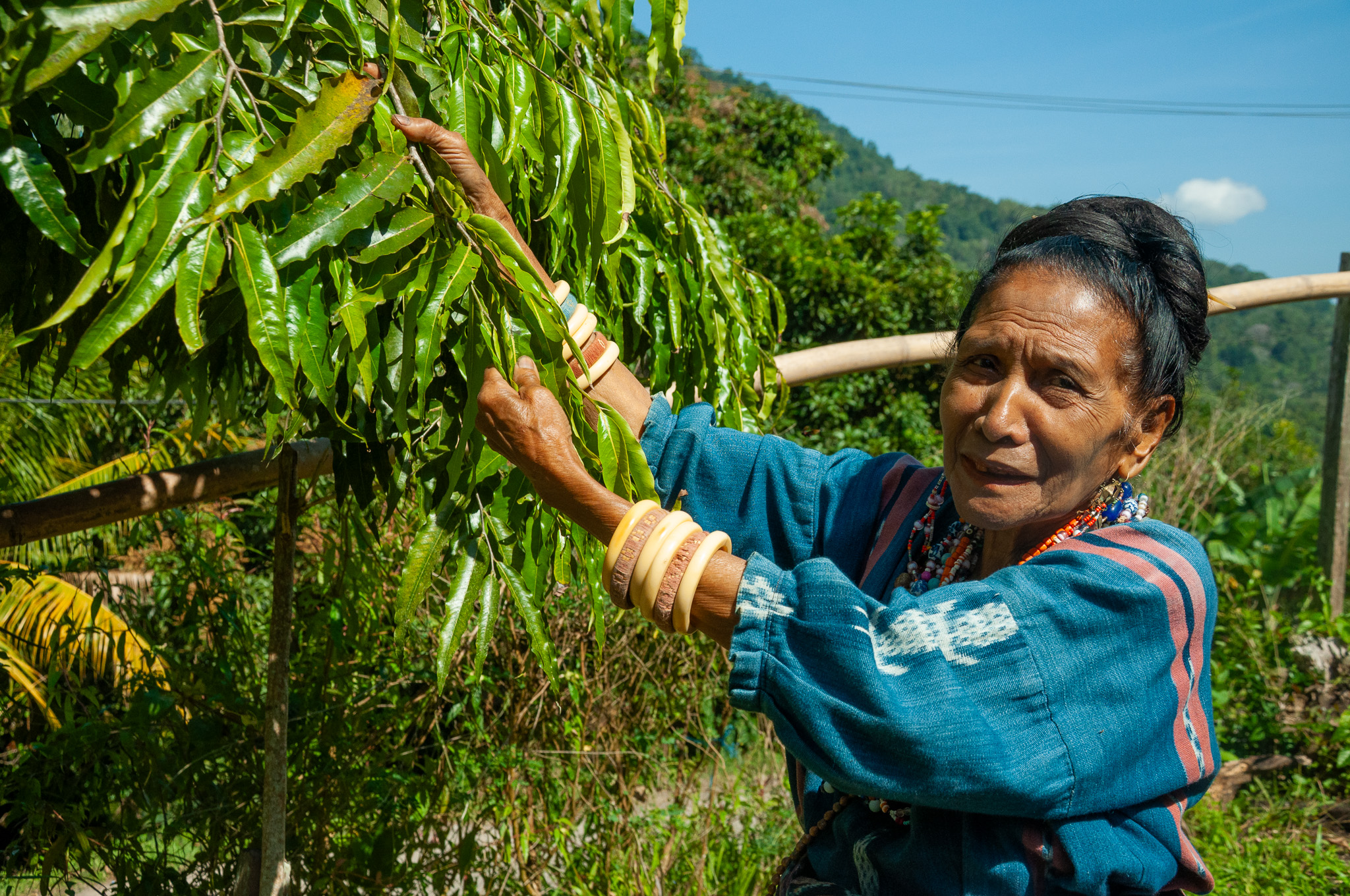
A master weaver shares her diverse garden.
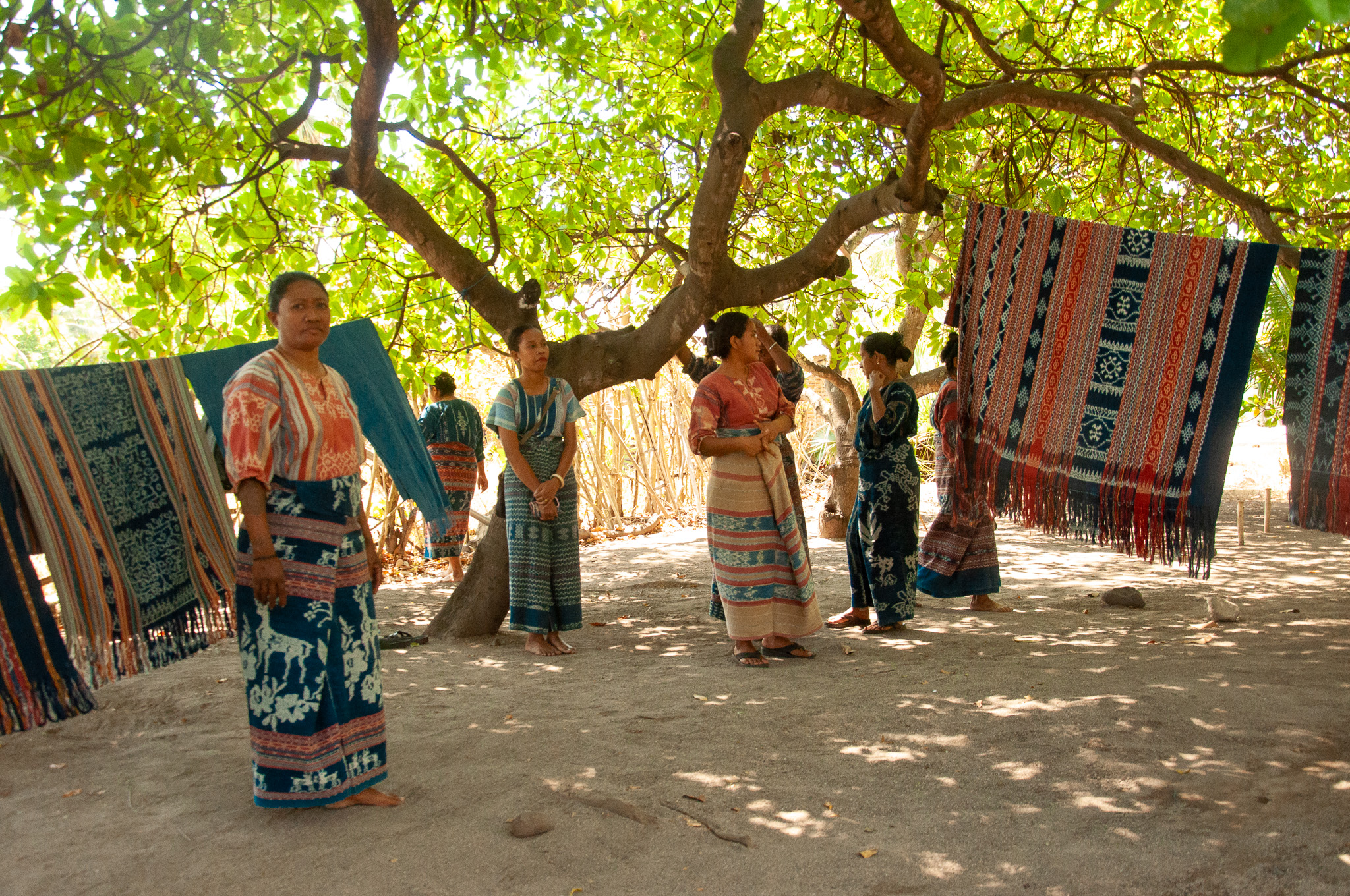
A women's weaving co-operative in Maumere.
I wouldn’t say that this natural disaster interrupts my story as much as it is the story. For the communities we visited on our field trip, the very same geography that rattled our bags, wet our clothes, and grounded our flights, the land, sea, and sky — they are the authors of their stories. Their songs and textiles, in words and motifs passed down through generations, tell their ancestral story of this relationship with the natural world. It was through this journey across the archipelago that this material culture reminds us that it is alive, as alive as the earth it came from.
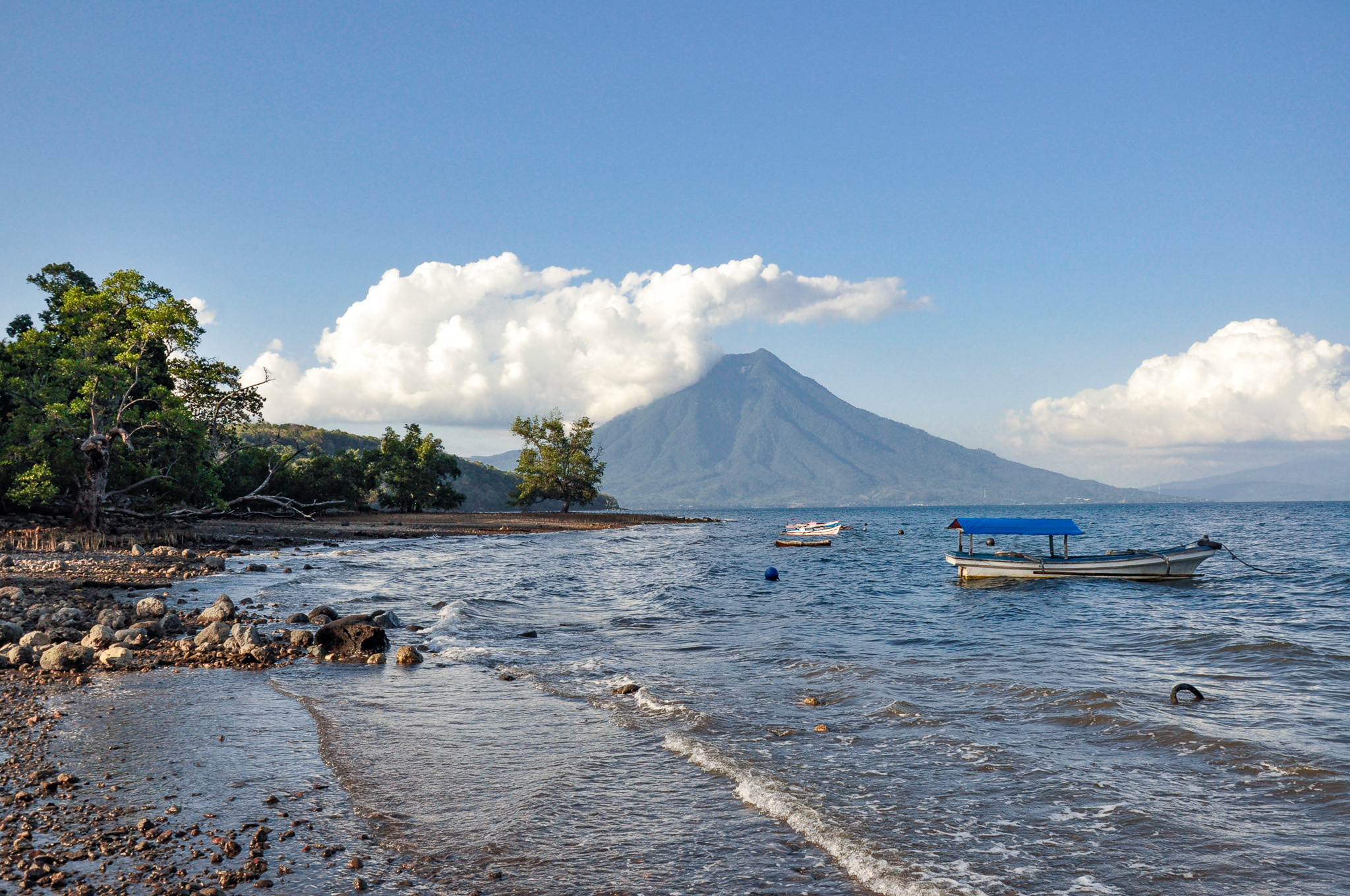
Ile Mandiri as seen from the shores of south Flores.


